
Scientists believe that Ethiopia is the cradle of mankind. Research shows that modern human beings and their hominid ancestors evolved in the eastern zone of the Rift Valley. “Lucy”, one of our most distant ancestors, lived around 3.2 million years ago and was found in the Awash Valley of Ethiopia. Most recently, an even older hominid fossil called “Ardi” was discovered in the Afar region of Ethiopia and is believed to be 4.4 million years old.
Axum, a city 3000 years old, is the cradle of Ethiopian civilization. Sometime in 980 B.C., the Queen of Sheba made this city the capital of her kingdom. As Ethiopian history tells it, after the Queen’s stay with King Solomon in Jerusalem, she returned to her country to give birth to a son whom she named Menelik. This child later became Emperor Menelik I, founder of the Solomonian dynasty. Most importantly, Ethiopians believe that when Menelik went to Jerusalem to visit his father, he brought the Ark of the Covenant to Axum, where it is believed to be resting until today.
After the decline of the Axumite Empire, the Zagwe dynasty established its reign over big parts of the country, with the center of power in Lasta, the area around Lalibela. King Lalibela was the most appreciated king of the Zagwe dynasty and it was he who ordered the construction of the sacred town, considered as a “New Jerusalem” with 11 rock-hewn churches, all carved out of the red mountain rock. Until today, Lalibela is considered to be a holy place for Orthodox Christians and a world heritage site. When the Zagwe dynasty declined, several years of changing rulers, coalitions, conflicts and wars followed, until the reign of Emperor Fasilidas in the 17th century, who turned the small village of Gondar in the north into the new capital city and a great religious and artistic center.
In recent history, there were other great kings who were able to unify and enlarge the country and oppose foreign invasions and interference. Menelik II, who extended the country to its current size, defeated the Italian colonial invaders in the historical battle of Adwa in 1896 and founded the current capital Addis Ababa. Haile Selassie, the last Solomonic emperor crowned in 1930, reigned for half a century until he was overthrown by a revolution in 1974. The military regime called the “Derg” ruled Ethiopia since then until it was overthrown in 1991 and the first democratic republic was installed.
Many monuments of the ancient and glorious past of this country remain: the monolithic churches of Lalibela, the carved obelisks and churches of Axum, more than 120 monasteries and rock churches in the Tigray region, as well as those scattered here and there along Lake Tana, the source of the Blue Nile. In each of these sacred places ancient paintings, manuscripts and sacred objects are preserved.
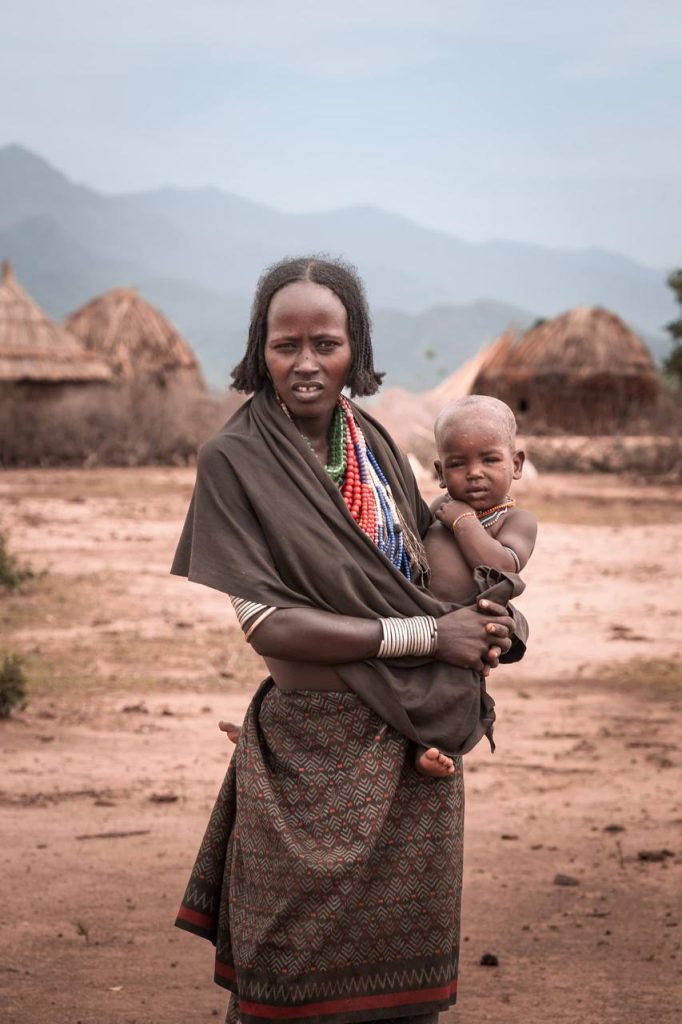
Omo Valley is one of the most ethnically diverse parts of Ethiopia. It is a land of warriors, hunters and pastoralists whose distinct age-old lifestyles are being changed by the outside world. Still, they are people whose daily existence and ways of life are ruled by traditions.
Among the 86 ethnic groups of Ethiopia, more than 16 of them can be found in south omo valley, an area that is known for its various indigenous groups and cultural heterogeneity. this region is witnessing a rise of tourists that travel in groups or autonomously, primarily to visit the pastoral communities in the region. The airport in Jinka, a small town centrally located in the region, is definitely playing a significant role in the development of the region.
Most of the people are pastoral community living in the south omo valley, their main livelihood depends on cattle rearing, combined with growing maize and sorghum for daily consumption, and some also do beekeeping as well as fishing. They are also popular research subjects of anthropologists and documentary makers. The circulation of images of their pastoral lifestyle, clothing and housing has made them an iconic example of African herdsman cultures. Representations of the people are often exotic and also erotic, attracting more tourists to flock to the region to see this remnant of an “unspoiled past” with their own eyes and cameras.
Modern Ethiopia is a mosaic nation with over 100 million people and 85 ethnic groups coexisting in harmony. Today, Addis Ababa is considered Africa’s diplomatic capital and is home to the headquarters of the African Union, the United Nations Economic Commission for Africa and over 100 embassies.